
Why American Express and mobile wallets aren't included in the October surcharge ban
Compayr Research · July 2026 · 4 min
The 1 October ban is broad — but it isn't total. Knowing exactly which payment types are in and out keeps you compliant without absorbing costs you're still legally allowed to pass on.
What's banned from 1 October
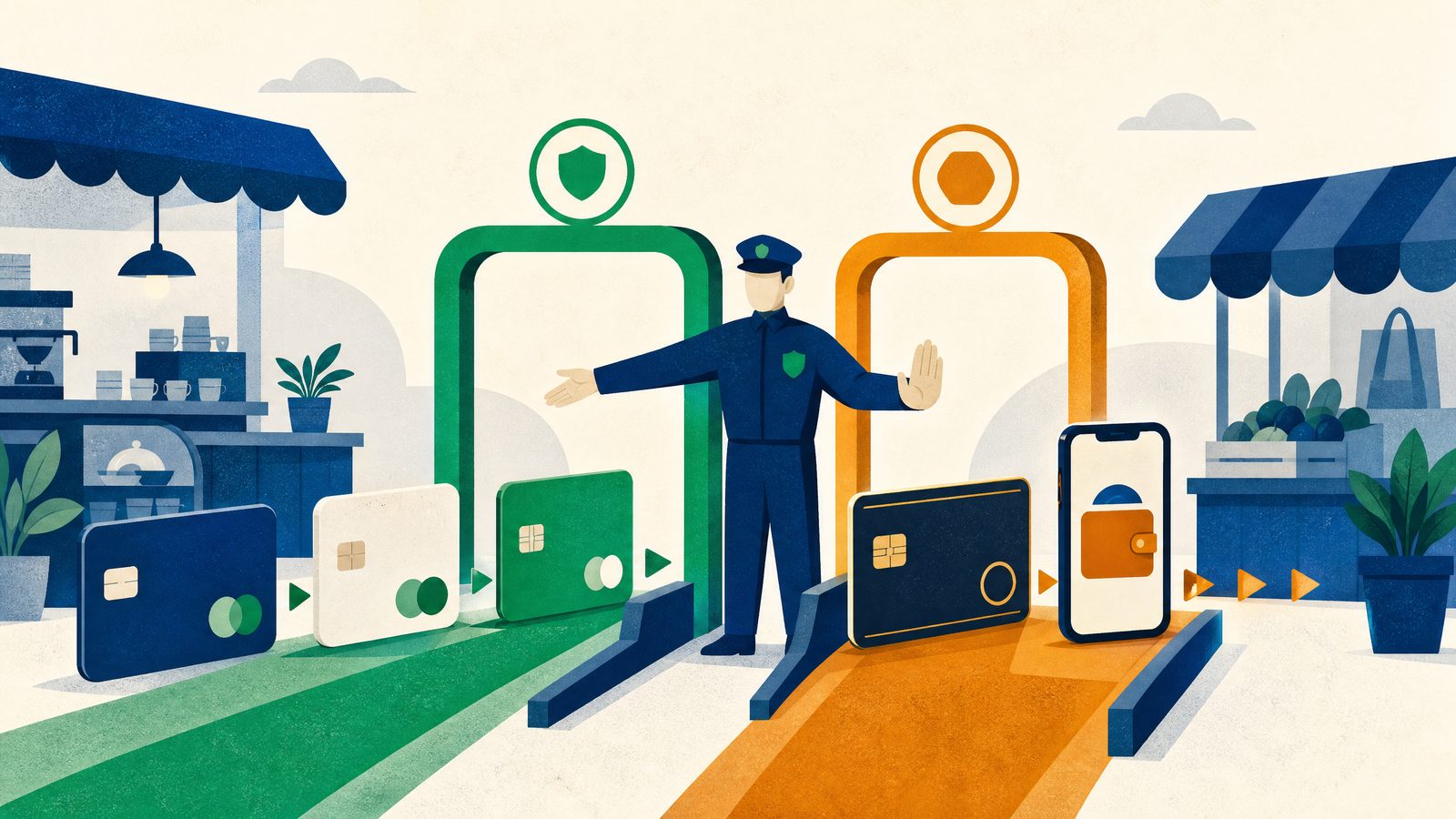
The RBA's ruling applies to the designated card networks: eftpos, Mastercard and Visa — debit, prepaid and credit [1]. From 1 October 2026 you cannot add a surcharge to any transaction on those networks, whether the card is tapped, inserted, swiped, or loaded into a phone.
That last point trips people up, so to be precise: a Visa card inside Apple Pay is still a Visa transaction. The wallet is just the delivery mechanism. You cannot surcharge it.
What's outside the ban (for now)
- American Express and Diners Club — three-party networks that fall outside the RBA's designation. Surcharging Amex remains legal (though whether it's commercially wise for your customer base is your call) [1].
- BNPL services (Afterpay, Zip and peers) — not covered by this ruling. Their own rules still apply: most BNPL contracts prohibit surcharging contractually, so check your agreement before adding one.
- Genuinely separate payment types — bank transfers, PayIDs, cash handling fees, and booking/service fees that apply regardless of payment method are outside card-surcharge rules entirely (but must not be disguised card surcharges).
The RBA has flagged a separate consultation from mid-2026 on whether these exclusions should change [1] [2] — so treat "Amex surcharging is legal" as current law with a review pending, not a permanent state.
The compliance traps to avoid
- Terminal configuration. Many terminals apply a blanket surcharge across all card types. From 1 October a blanket rule is illegal for eftpos/Mastercard/Visa — if you keep an Amex surcharge, it must be network-specific. If your terminal can't split by network, the practical answer is usually to remove surcharging entirely.
- Signage. "A card surcharge applies" signs must come down or be rewritten to name only exempt networks. Ambiguous signage risks ACCC attention.
- The disguise trap. Rebadging a card surcharge as a "service fee" that mysteriously only applies to card payers is the fastest way to invite a regulator's interest. If a fee applies to everyone regardless of payment method, it's a price. If it tracks card use, it's a surcharge.
What this means for you
For most small merchants the clean play is simplicity: remove surcharging across the board on 1 October, reprice if you must, and avoid running a two-tier checkout for the sliver of Amex volume most businesses see. If Amex is a meaningful share of your turnover (hospitality and travel, typically), configure a network-specific surcharge properly and document it — and watch the mid-2026 consultation, because the ground may move again.
Absorbing the cost instead? Then the cost of acceptance is worth minimising. Compare providers by total monthly cost at your volume. Compare now →
References
- [1] Reserve Bank of Australia, "Review of Merchant Card Payment Costs and Surcharging — Conclusions Paper", 31 March 2026.
- [2] The Guardian, 31 March 2026.
See what you'd really pay — compare every major provider at your turnover
Compare nowRates and provider details are indicative, last verified June 2026 — verify with providers. Compayr may earn a referral fee when a merchant switches via our comparison.
More in RBA Reforms
RBA bans card surcharges from October 1: What this means for your business
From 1 October 2026, adding a surcharge to eftpos, Mastercard and Visa payments will be illegal in Australia. If your business surcharges today, the cost of accepting cards moves onto your side of the ledger — and the time to plan for that is now, not when your first October statement lands.

The 62.5% cut to wholesale card costs — and why your bill may not budge
While the surcharge ban grabs the headlines, the quieter half of the RBA's October reform is the one that decides whether card acceptance actually gets cheaper for your business: a cut to the wholesale "interchange" cap on domestic credit cards from 0.8% down to 0.3% [1]. That's a 62.5% reduction — in the cap. What lands in your bank account depends entirely on how your provider prices you. For many merchants, the honest answer is: nothing, unless you act.